Showing posts with label Paranormal. Show all posts

Wednesday, August 16, 2017

Haunted Extra, Vol. 1.01 - Queen's County Museum Revisited


We just finished the first episode of Haunted Extra, an ad hoc compilation of bonus materials for the series Haunted. 

In this episode, Dillon Garland and I discuss our trip to the travel to the 2017 East Coast Paraconference in Liverpool, NS, where we got the opportunity to re-visit the Queen's County Museum a few months after twe investigated it for the first season of Haunted.

Joined by paranormal researchers Ryan Sprague and Greg Bishop, we tried to replicate REM-Pod activity that they experienced at the Museum in April when I attempted to contact my old friend Mac Tonnies (who passed away in 2009).

The results were fascinating, and the video evidence we recorded at the Museum on 11 August 2017 is included here.

Paul Kimball


Thursday, August 03, 2017

Haunted - Cooper's Inn Outtake #2


An outtake from our investigation at Cooper's Inn in Shelburne, NS, on May 2nd. It isn't going to be one of our first season episodes on Eastlink, but we still had a fair bit of interesting and puzzling stuff happen, including a camera microphone "malfunction" that left us all baffled. Of note is that it began in a room that Dillon had previously dreamed about, just as he began to relate the story of the dream (which involved a malevolent presence). 

As I always say about these types of things, context and timing matter.

For more information on Haunted, visit Winter Light Productions.

Paul Kimball

Haunted Outtake - Cooper's Inn (Part I)

Here's a piece of trivia for you - I hate ghost investigation shows on TV. I've never made it all the way through an episode of any of them. I particularly loathe Ghost Adventures, but Ghost Hunters is almost as bad. I've only watched as much as I have to over the years in a professional capacity as a producer and director, in order to see what other shows in the ghost investigating genre look like, and how they are presented. Not so that I can copy them, mind you - rather, so I know what not to do.

It all seems so fake to me, because almost all of what you see is "action" (much of it, I am convinced, being faked, or at the very least highly exaggerated). That's not how it really works in "the field". A lot of time is actually spent sitting around, talking to your fellow investigators. I wish the ghost shows would give us more of this, and less of the staged "bumps in the night" stuff. 

I think this is critical because it helps the viewer understand the investigators more as people. As I'm convinced that if there is anything at all to the paranormal, it has as much to do with the people involved, their journey, and their personal interaction with whatever might be out there as it does anything else, then understanding the people, and who they really are (as much as that is possible in any television program), is vital to the overall story.
That's what we try to do on Haunted. 

We investigated Coopers Inn in Shelburne, Nova Scotia, in May 2017 for Haunted, and while the location won't be one of the places that makes it into the actual series (you always film more locations than you need), there were still some cool things that happened when we were there, both from an experience point of view but also from the personal point of view. 

Falling into the latter category is this seemingly good-natured exchange between myself and my fellow co-host Holly Stevens, which indicates that while everything seems fine on the surface, there is an edge developing between us, largely due to some of the things each of us did (or might have done) in relation to the other in the course of our previous investigations at other locations during the course of filming. 

It's all fun and games until someone summons a demon, or invites some entity to possess a co-host.

Paul Kimball


Haunted outtake - Cooper's Inn from Paul Kimball on Vimeo.

Monday, July 31, 2017

Haunted: Holly Stevens at the Yarmouth jail


My good friend and co-host Holly Stevens investigating the old jail in Yarmouth, Nova Scotia, in this teaser clip from the TV series Haunted (premiering in Canada in October on Eastlink TV).

This was just the beginning of what was a night of almost non-stop weirdness, which made the old Yarmouth jail one of the most interesting - and scariest - locations we have ever investigated.

Paul Kimball

Sunday, January 17, 2016

I Went to a Hockey Game and Some Synchronicity Broke Out!

The Halifax Forum on Saturday evening, 16 January 2016.

Given my interest in, and experiences with, synchronicity, last night's hockey game was... well, interesting. 

At the last minute this evening I decided to walk to the Halifax Forum, despite a snow storm, to catch a university hockey game between one of my alma maters, the Dalhousie Tigers, and the UPEI Panthers, whom I had never seen play before and knew nothing about this year's team. 

Just before leaving the house I stopped to chat briefly with my room-mate Linda, who had been flipping through channels and come upon Sense and Sensibility with the late Alan Rickman, which she decided to watch (both Linda and I were huge Rickman fans). Indeed, Rickman was on screen for the entire short period of time we were talking. 

I got to the game just in time to watch the warm-ups, and then I grabbed a seat right behind the UPEI bench, which was a great vantage point for picture taking. UPEI filed out onto the ice, skated around, and then after the national anthem the players not starting sat down on the bench. 

Who should sit down on the bench right in front of me when the UPEI Panthers took the ice? Derek Ryckman, a defenceman for the Panthers. As you can see, his uniform number is 2. 

Ryckman on the bench in front of me just before the game started.

Making it even weirder? When I got home, I looked Ryckman up to see where he's from. lt turns out that he hails from Alberta. 

If you put Ryckman's uniform number 2 into play here and take the first two letters from Alberta you get... Al Ryckman. 

Cue the Twilight Zone music. 

Paul Kimball


Sunday, March 29, 2015

Radio Appearance - 29 March 2015


For those interested in the paranormal, I'll be on radio out of the United Kingdom today discussing ghosts, UFOs, and whatever else pops up... and I may sneak in a revelation or two about the "Roswell slides" if I'm feeling mischievous. If I have my time conversion right, it's at 4:30 Halifax time (after the hosts chat amongst themselves for 1/2 hour).

Paul Kimball

Sunday, November 02, 2014

The Bookshelf


Most of my "weird" books are in boxes in a storage locker (at over 150 paranormal-related ones, it's just too much for my apartment) - these are some of the ones I have on hand. It's an eclectic bunch, that's for sure.

Paul Kimball

Tuesday, March 11, 2014

The Paranormality of UFOs


Jason Gammon, a very vocal pro-ETH proponent, has left a few comments on a previous post wherein he decries the people who consider UFOs as part of what can loosely be called "the paranormal." As one of those people, I thought I should offer a few comments as to why Gammon is off-base.

Merriam-Webster's on-line dictionary defines "paranormal" as follows:

"Very strange and not able to be explained by what scientists know about nature and the world; not scientifically explainable."

I can see where Gammon (and others like him) are coming from. They want to be taken seriously with their die-hard belief that space aliens are visiting Earth, and they believe that wrapping themselves in the cloak of "science" will lend a veneer of credibility. But they're wrong.

Why?

Because UFOs are no more or less amenable to scientific inquiry than ghosts, or near death experiences, or bigfoot, or any of the other things usually lumped into the realm of the paranormal; indeed, in many ways I would argue that UFOs are actually less amenable to scientific study and analysis than something like bigfoot or NDEs. 

Gammon is correct when he writes in one of his comments that the ETH could possibly be proved, but he's wrong when he suggests that the proof can somehow be discovered by us. The only way that we are ever going to have proof of extraterrestrial visitation here, should it be happening, is if the visitors choose to reveal themselves to us. The idea floated by Gammon that perhaps they might crash and we could recover the debris and use that as proof is patently ridiculous (as I've noted before), and betrays a form of wish fulfillment that has nothing to do with science and everything to do with what the late Karl Pflock correctly called "the will to believe."

Until aliens reveal themselves to be the cause of the UFO phenomenon we are left with are a lot of interesting stories that may or may not be true, and that are by their very nature "paranormal" - very strange, and not explainable by what scientists currently know about nature and our world. If these aliens really are well in advance of us, then it will be a very long time before our science manages to catch up to them... by which time they may well have moved even further away from us. Gammon and others like him might be convinced that we know that someday we will turn ourselves into cyborgs / AI and travel out to the stars, and therefore others before us must have done it and therefore must be here, but they can't possibly know that... anymore than Joe Ghost Hunter can know that a "ghost" is the spirit of dead Aunt Mabel.

Gammon wants to pretend that UFOs are not mysterious (echoing all of the pro-ETH believers before him), which in a weird and very ironic way makes him no different than the very ETH-disbeliever that he so often rails against. Like them, he has his answer, mystery be damned.

Too bad for Gammon, because his confirmation bias has blinded him to the reality that the mystery is where the real wonder may someday be found.

Paul Kimball

Wednesday, October 02, 2013

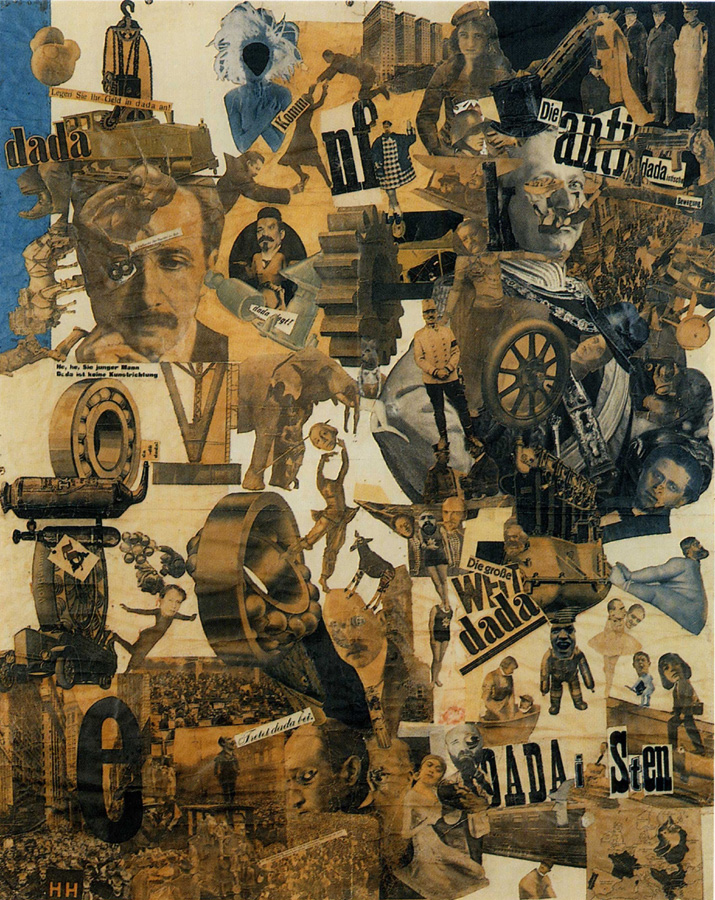
The Dadaist Paranormal School


by Greg Bishop
[from the foreword of The Other Side of Truth]
It is clear, then, that the idea of a fixed method, or of a fixed theory of rationality, rests on too naive a view of man and his social surroundings. To those who look at the rich material provided by history, and who are not intent on impoverishing it in order to please their lower instincts, their craving for intellectual security in the form of clarity, precision, objectivity, truth, it will become clear that there is only one principle that can be defended under all circumstances and in all stages of human development. It is the principle: anything goes. – Paul Feyerabend
The UFO subject is far more interesting than lights in the sky, people from other planets, or simple hoaxes and mis-identifications. Many are surprised about the verifiable connections between UFOs and other tabloid fodder such as psychic phenomena, ghosts, and liminal creatures like Bigfoot. Most people who claim to be researchers in these subjects are often insular about their particular areas of interest, sometimes to the point of open hostility when the similarities are noted. “Ufologists” (a misleading term for an unregulated discipline) routinely bristle at the mention of any strangeness outside of supposed aliens. They have been fighting a 50-year battle for respectability, and that other “junk” might make them look silly.

What they don’t seem to realize is that the vast majority of the public, particularly the arbiters of reality (primarily the media and academia), think it’s all silly. The public face of paranormal research has done itself few favors in this regard. The loudest and craziest person in the room nearly always controls the conversation, gets on the popular radio shows, or gets the big book or movie deal.

For many years, however, there have been a few voices amongst those who think deeply about the paranormal whose study of the subject has not been reducible to sound-bites or hackneyed expeditions conducted on television shows using night-vision cameras strapped to high-strung actors and so-called “experts” (whose mantra always seems to be, “Did you hear that?”).

This iconoclastic group of paranormal enthusiasts and researchers, such as Nick Redfern and the late Mac Tonnies, has been quietly cheerleading the unheralded insights of UFO and paranormal researchers like Jacques Vallee, Jim Brandon, John Keel, Jenny Randles, Greg Little and Graham Hancock, as well as the pioneering work of scientists such as Dean Radin, Robert Jahn, Richard Strassman, and Hal Puthoff.

Most UFO buffs and paranormal fans have never heard of these people, who have recorded their insights in books that largely remain unread, mainly because they downplay or outright reject the aliens-from-other-planets idea. The scientific viewpoint of credentialed academics such as those mentioned above is also routinely ignored because it doesn’t flatter the “new age” bias of most readers. It also seems that fewer people have the patience to wade through the entire text of a book anymore, which puts readers of the present volume in rare company.

Most people have self-imposed blinders on which keep them from seeing outside the narrow viewpoint of their own personal interests, experiences and opinions. Many are also unaware of the underlying sagas that have brought them, their societies, and humanity in toto to this point in history. Our past has taught us that almost nothing happens in a vacuum, and the present is the result of a tangled fabric of interconnected and often disparate stories. The paranormal is no different. 

We have always lived with an awareness of forces and influences that are not apparent to our five senses, observation over time, or simple deduction. Some of these forces were eventually found to have verifiable explanations, such as magnetism, electricity, the weather, the motions of planets, the flight of birds, and so on. Others, with a long history of anecdotal evidence, like meteorites or ball lightning, took longer to solve. Other more complex and esoteric elements of our world, such as those discussed herein, are still awaiting better methods and theories to explain them.

Those who are invested in a fixed way of looking at the world declare that since we have perfected all methods of verifying reality, then anything that does not conform to the current understanding of physical laws does not exist. The truly skeptical attitude would be to reserve judgment and declare certain issues “unproven.” Anything else veers perilously close to belief, not science.

A few pioneering individuals, such as the membership of the Society for Scientific Exploration, actively use the scientific tools currently available to test issues such as ESP, reincarnation, psychokinesis, UFO sightings, and other “fringe” subjects. They are aware of the pitfalls of belief and experimenter bias, as well as the issue of scientific peer pressure, the question of who pays the bills and what they want to hear, and the specter of fundamentalist skepticism. 

Then there are the rest of us, who look on and try to make sense of something that we are often told is not worth the time or effort to worry about. After many years of study, listening to paranormal radio shows and attending lectures, most either become disillusioned, or settle into some sort of belief system based on their hopes and wishes. There are a thoughtful few, however, who decide to treat the whole thing as a sort of journey of learning. Those are the voices worth listening to.

Paul Kimball is one of those people who have embarked upon this journey. He often examines the paranormal in terms of a creative viewpoint, or even as an artistic act. In light of this, much reported witness testimony of UFOs and other “paranormal” strangeness could actually be considered surrealist stories.

Paul Feyerabend was a philosopher of science, and author of the landmark book Against Method, wherein he put forward the argument that no progress can be made under inflexible rules, especially those of the scientific method. In a 1972 letter to a friend, Hungarian philosopher Imre Lakatos, Feyerabend declared his allegiance to the ideals of the Dadaist artistic movement of the early 20th century. His words could be instructive to the paranormal researcher and fan alike:
A Dadaist is utterly unimpressed by any serious enterprise and he smells a rat whenever people stop smiling and assume that attitude and those facial expressions which indicate that something important is about to be said. A Dadaist is convinced that a worthwhile life will arise only when we start taking things lightly and when we remove from our speech the profound but already putrid meanings it has accumulated over the centuries (“search for truth”; “defense of justice”; “passionate concern”; etc. etc.). A Dadaist is prepared to initiate joyful experiments even in those domains where change and experimentation seem to be out of the question.”
Perhaps after reading The Other Side Of Truth, I will now finally declare myself a student of the “Dadaist Paranormal School.” Maybe you will too.

New thinking such as that displayed by Paul is sorely needed in the paranormal field. I have seen his opinions greeted with open hostility on my radio show and elsewhere. Incredibly insane stories such as the U.S. President using a time machine to get to Mars, or culinary recipes channeled from historical figures, don’t garner half the vitriol that my good friend does. To me, that means he has something important to say that threatens the thoughtless.

Good.

Tuesday, August 20, 2013

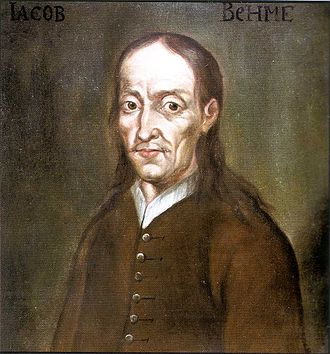
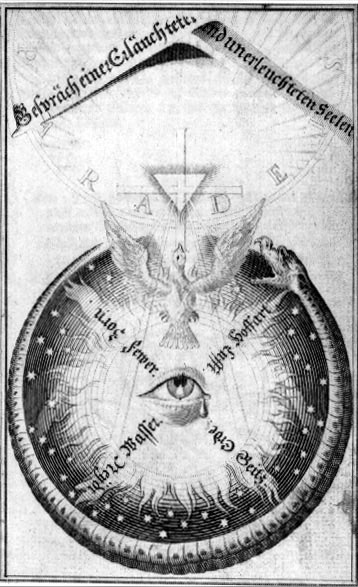
Jacob Böhme and the Nonduality of the Paranormal


Those seeking to understand the true nature of the paranormal would do well to immerse themselves in the writings of the world's great mystics, as opposed to more reports of eyewitness UFO sightings, ghost hunter television programs, or your average once-a-week sermon. A good place to start would be the work of German theologian Jakob Böhme, who lived from 1575 until 1624. He wrote about the non-duality between humanity and God (or, as I would call it, an advanced non-human, or possibly para-human, intelligence). As has been the case for many mystics, in 1600 Böhme had a "vision" that he believed revealed the spiritual structure of the world to him, as well as the relationship between God and man, and good and evil. This was followed in 1610 by another, even more profound experience which convinced Böhme that he had a calling to speak and write about his experiences, and his interpretation of what they meant. He was viewed as a heretic by the Lutheran religious authorities of his time.

Böhme's mystical ideas were complex, and like many of us he struggled within the confines that language imposes on the communication of ideas. But the central thrust of his work,  often presented told in allegorical terms, is clear and accessible, and still resonates today - like the Gnostics, he eschewed the external rule-making god of organized religion, and focused on the search for the Inner Light, "the true light, that lighteth every man that cometh into the world." [John 1:9]

Böhme posited that there was no difference (the "non-duality") between human beings and God - we are part of each other. He wrote:
Don't think that God is only in some far away heaven, and that the soul, when it departs the human body, must soar aloft many hundred thousands of miles off in order to reach Heaven. No, it need not do that to reach Heaven, because when the soul in Christ departs the body, it is already present in Heaven and there the soul is with God and in God, and also with all the holy angels, and the soul can suddenly be above and suddenly beneath; it is not hindered by anything. For in the unity of God there is no separation of seeming distance. Indeed, in what place should the departed soul of man rather be than with its King and Redeemer Jesus Christ? The fact is that near and far off in God are one thing, one comprehensibility; Father, Son, and Holy Spirit, everywhere. 
Moreover, this unity is found throughout the universe, for all that there is both here and throughout the universe is, in essence, one Person manifesting Himself. This seemingly outward universe is nothing more than the Godhead playing the joyous melody of His life through His creative instruments which are all of the varied physical forms found throughout the universe, especially the form known as man which He always intended to be His highest song of praise to His eternal and uncreated glory! So you see that wherever you are in this world, you are in Heaven. 
The universe is the outcome and development of "One Grand Thought." All things are governed by one central law, and all planes of existence are related. "This world," wrote Böhme  "with all of its physical properties is in union with the vast vistas of the heavenly spaces above the earth. There is only one Heart, one Being, one Will, one God, All in all."


Böhme's work is deep and rich, and rewards those who undertake an examination of it with a broader insight of the possibilities inherent in what we call the paranormal, or the supernatural. If we are all one with each other, and the "divine", then the "paranormal" is more than even a reflection of ourselves - it is us, even as it appears separate and often confusing and mysterious, to the point of apparent inscrutability. But that could be the result of our own dislocation from our connection to our true self, which is still there, waiting to be discovered... and perhaps, on a subconscious level, reminding us through lights in the skies and other hints that there is something beyond the rationalist and materialist world in which we have imprisoned our true nature.

A good starting point for internet resources available for Böhme can be found here and here.

Paul Kimball

Into The Mystic


Are we just meat-based computers, or is there much more in there... and out there as well (as George Harrison wrote, within and without you)? That is the fundamental question underlying all aspects of the so-called paranormal, I believe - including UFOs.

The great mystics - which include the Christian mystics - have been wrestling with this topic from the beginning of recorded history. Jesus, for example (the greatest of all Christian mystics, although I suppose that it would be more accurate to view him as a Jewish mystic) - in John 17: 21 - 23 [KJV]:
That they all may be one; as thou, Father, art in me, and I in thee, that they also may be one in us: that the world may believe that thou hast sent me. And the glory which thou gavest me I have given them; that they may be one, even as we are one: I in them, and thou in me, that they may be made perfect in one; and that the world may know that thou hast sent me, and hast loved them, as thou hast loved me.
As I noted in my recent podcast with Dean Radin, this mystical core has been buried by the established churches for most of the last 2,000 years (with the odd exception), but it's still there, open to a much more interesting interpretation and discussion than you'll find coming from most pulpits. And it's in that mysticism that I believe the truth resides, should there be a truth to the paranormal beyond the structures of our rationalist / materialist worldview, because it offers us the opportunity to explore the most fascinating of all possibilities - that at a basic level (call it a quantum level), we are all God, and God is us - in which case, the things we are seeing are things we have created ourselves.

As Hildegarde of Bingen put it: "You are encircled by the arms of the mystery of God."

Or, as Luke wrote [17:21, KJV] - “The kingdom of God is within you”.

Paul Kimball


Monday, August 19, 2013

The Transfiguration of the Paranormal

Max Beckmann, Birds' Hell (1938)

Apropos of the general theme discussed in my book The Other Side of Truth: The Paranormal, The Art of the Imagination, and The Human Condition (namely, that the "paranormal" is an artistic presentation to us by an advanced non-human intelligence), as well as some ongoing discussions in the comments section on various posts at Rich Reynolds' UFO Iconoclasts blog about the nature of our possible interaction with this advanced non-human intelligence, I think this quote by one of my favourite painters, Max Beckmann, is apropos:
Art is creative for the sake of realization, not for amusement: for transfiguration, not for the sake of play. It is the quest of our self that drives us along the eternal and never-ending journey we must all make. 
As I wrote at Rich's blog, I don't really care who is caressing the canvas with the brush, or when, or what it looks like - I'm more interested in what it all means, or is meant to mean. And therein lies the philosophical conversation that ufology (and all of the crazy paranormal stuff) has been missing, as does most modern formalized religion. But it's the only part of the puzzle that really matters, at least to me. 

In the quest for meaning we find ourselves, and are transfigured in the process.

But why would an advanced non-human intelligence engage in all of this, often in what seems to the modern rationalist / materialist to be the most obtuse and in many cases ridiculous ways? I quote again from Beckmann, who stated:
Imagination is perhaps the most decisive characteristic of mankind. My dream is the imagination of space – to change the optical impression of the world of objects by a transcendental arithmetic progression of the inner being. That is the precept. In principal any alteration of the object is allowed which has a sufficiently strong creative power behind it. Whether such alteration causes excitement or boredom in the spectator is for you to decide.
In order to understand "the other" (whatever that "other" may be), we must first think like an artist, whether a painter, a musician, a poet, an actor, a magician, a dancer... whatever. We must use our imagination, and try to feel what it is like to be a creator and a performer.

In short, we must think like them... and only then can we begin to understand them, and appreciate the works that they are creating.

Paul Kimball

Thursday, June 16, 2011

Ghost Cases - The Case of the Haunted Graveyard


Here is the eighth episode of the Redstar Films / Clerisy Entertainment documentary series Ghost Cases, which ran on EastLink TV in Canada in 2009-2010, and has now been sold to True Vision in Thailand. This episode was filmed in Shocklach, England, and features my good pals, Dave Sadler and Steve Mera of the Unknown Phenomena Investigation Association (UPIA).

I've discussed this case several times since on the radio, most recently on Jim Harold's Paranormal Podcast, where I said it was the weirdest / spookiest episode of the entire series... because it was!

Paul Kimball

Tuesday, June 14, 2011

Talking "ghosts" with Jim Harold on the Paranormal Podcast


Also available this evening is my appearance on the Paranormal Podcast with Jim Harold, where I discuss my experience on Ghost Cases, and the ghost phenomenon in general. You can tune in here.

I enjoy talking with Jim, because he takes a sensible but open-minded approach to the paranormal, just like good pals Tim Binnall and Greg Bishop.

Paul Kimball

Monday, June 13, 2011

Binnall of America - Paul Kimball & Beyond Best Evidence


I make my return this week to one of my two favourite podcasts, Binnall of America (the other favourite being Radio Misterioso, of course). Here is the description of the episode from Tim:
Full Preview: We kick things off by diving right in to discussion on Beyond Best Evidence, as Paul talks about the 2 month fundraising campaign we have organized and reflects on the process and how things have gone so far. Paul also responds to some specific critics and criticisms of the campaign by explaining more about the origins of the 'crowd sourcing' concept for the film. He then addresses the future of the film, considering the tepid response to the fundraising campaign. Wrapping up the focus on Beyond Best Evidence, Paul then talks about the thematic goals of the film and why it stands apart from the standard cable TV UFO fare.
The conversation then leads to discussion on UFO research, in general, and Paul talks about the 'underground war' between 'Michael Bay Ufology' and the people who are looking at the phenomenon from a different angle. This leads to Paul talking about the paradox and challenges of UFO disclosure that he believes are being ignored by most Ufologists. We then ponder the idea that perhaps the human race, and America in particular, was actually better equipped to deal with the UFO phenomenon back when the modern era started in the late 1940's and 50's. We also examine the issue of Ufology's malaise of recent years and Paul talks about what sort of aspects of the field still excite him.
We then get ultra meta on Ufology and the paranormal by discussing the problems surrounding specialization, trying to understand the unknown, and attempts to win over the mainstream, whether it is science or public interest. Paul then talks about how examining the issue of a non-human intelligence could lead us towards becoming an 'empathic society.' Paul then talks about how people who don't vote don't have a right to complain and draws comparisons from that perspective to the paranormal community, at large.
This leads to some discussion on how some laypeople in the paranormal expect researchers and members of the media to sacrifice their time and money for the 'higher calling' of chasing these mysteries. Going down a different path, we get Paul's take on 2012 and the hype leading up to the big day. Paul ends up discussing Peter Gersten's 2012 suicide plan and the backlash against it from the UFO community. He also talks about how 2012 could allow for personal growth for many people, regardless of what actually happens. In turn, we also examine the question of whether or not the vast majority of people, nowadays, are even capable of that kind of introspection.
Paul also talks about the paradox of perceived power and how the influence of people who create ideas and concepts often outlives the contributions of their contemporaries who wield political power. Given that Paul says this is his last interview regarding Beyond Best Evidence and that BBE will be his last UFO film, we ask the natural question of whether or not this means he is leaving the paranormal behind for good or if he has other plans.
Heading toward the close of the conversation, we break the 4th wall and address the interview, where Paul seemed to talk much more than Binnall, and discuss podcasting, in general. We also talk about where Beyond Best Evidence goes from here, now that the fundraising stage of the project is coming to a close. Wrapping things up, we find out how people can donate to help Beyond Best Evidence get made and things then break down as we talk about BoA:Audio dropping our 'popular' theme music intros as well as the BoA thongs we used to sell when the website first started.
Listen to the full episode here.


As always, great chatting with my good friend Tim, who was doing the podcasting thing before just about anyone else, and thanks to everyone who has contributed to Beyond Best Evidence so far.

Paul Kimball

Tuesday, June 07, 2011

Radio Misterioso - Creativity and Synchronicity


Here's the PG-rated version of this past Sunday's Radio Misterioso show with Greg, Walter Bosley and yours truly. Greg describes it thusly:
RM friend and supporter Paul Kimball returned for a live appearance on June 5th. Walter Bosley was also with us as we talked about our writing projects, the creative process, and tried (without success) to stay away from the UFO subject. The after a few minutes, we seemed to hit a groove and the conversation ranged from Paul’s favorite L.A. authors to the origins of and interaction with non-human intelligence. We also touched on Paul’s opinions of some trends (or lack thereof) in the UFO field. We kept returning to the theme of Kimball’s recent run of coincidences and/ or synchronicities and whether they were purely internal, external or recursive with perceived reality (or all three). Another important theme was the Very Sad Monkey and whether he was actually sad or just having a bad day.
You can listen to the episode here.

Paul Kimball

Sunday, June 05, 2011

Radio Misterioso tonight...


Just a last minute reminder that Greg, Walter and I will be on Radio Misterioso from 11 pm to 1 am-ish EST this evening, live from Los Angeles. All three of us have vowed not to talk about UFOs or ufology - I have the over / under at 8 minutes for that!

Tune in at Kill Radio, or catch it later on the podcast.

Paul Kimball

Friday, June 03, 2011

Radio Misterioso this Sunday


A programming note: I'll be live in the studio with good pal Greg Bishop this Sunday, the 5th of June, on Radio Misterioso, talking about the usual weirdness for 2 + hours - 8 pm until 10 pm PST / midnight to 2 am AST. Fellow traveler Walter Bosley will be along for the ride as well.

Among the topics of discussion will no doubt be my run of "coincidences" whilst in the United States the past three weeks. I'll save the latest for the show, but here is a clue:


You can listen at Kill Radio.

Paul Kimball

Sunday, May 29, 2011

The Unified Field Theory of the Paranormal


My best friend was a master at the "come hither" look. He could sit in a bar, stare at a girl in a certain way, and in most instances he would establish a contact that often led to... well, let's just say that it led to "something". I remember once betting him a pint beer that he couldn't get a particular girl to notice him. He went even further.

"Make it a pitcher of Stella Artois," he said, "and I'll have her and her friend at our table in ten minutes."

That seemed to be too good a deal to pass up, because while I didn't think he could do it, the girl's friend was cute and I had no problem playing wingman, so I took the bet. Seven minutes later, I was ordering him a pitcher of beer... and buying a couple of drinks for the girls, who had come over to our table without my friend saying a word to them, or motioning, or anything like that. He just looked at them in that certain way of his, and by doing so he changed the course of events. I could never do it myself - I would almost always look away at the pivotal moment, and even if I didn't look away, I could never quite read the "signs". Indeed, years later I wrote a song about the experience (and other related things).


This is, in its own way, akin to the observer effect - when you observe something, you invariably change it.

The theoretical physics of all of this is far beyond my proverbial "pay grade", so I'm not going to use the word "quantum" here - it's something that's tossed about far too frequently by people who don't understand what it truly represents in all its facets (including me). But we can see the basic principle that observation changes behaviour in the real world, without getting into theoretical physics. The example of my friend in the bar is amusing, but a far more concrete and pervasive example comes from my own work as a documentary filmmaker, and "reality" television, where the first rule of thumb is that as soon as you point a camera at someone, you will almost invariably change their behaviour. People react to being observed.

Many documentary filmmakers tend to look down on "reality" television as some kind of abomination on the grounds that it's not an accurate representation of reality, because such shows are often heavily scripted, and even if they're not, how can you expect someone like Gene Simmons tor Rick Harrison to behave the same way he normally would without a camera crew following him around. But here's the question that needs asking: what is reality, and what is normal? We change our behaviour all of the time, in both big ways and small ways, based on our interactions with others, or based on being observed. All that "reality" television does is create a different reality than the one which might have existed had the cameras not been there, but either reality would have largely been structured according to people dealing with other people in some way. It is an observed reality regardless, just as any "traditional" documentary is based on an observed reality, and the filmmaker's ultimate presentation and interpretation of that reality.

History shows us that you don't even need other people to have an observed reality where behaviour is constantly influenced and changed. All one has to do is read the diaries of Christians throughout the years to see that even the belief that they were being observed by God was enough to significantly influence their actions (indeed, an atheist might posit that the whole idea of God was introduced as a behavior control mechanism, but that's a debate for another day). In essence, a God that observes, and from time to time interacts in some way with humanity, as many people believe happens, is no different than a camera crew and writer working on a "reality" television series. What was Jesus and the crucifixion but the ultimate plot change in the "story"? Indeed, if it all happened now, it would probably look something like this:


In short, we live in an "observed reality", where our actions are constantly influenced by the awareness of being observed, whether this "awareness" is conscious, or unconscious (it's worth noting that the observers are increasingly artificial in nature, like the pervasive video cameras that we see on almost every street corner in most North American cities these days).

The tricky bit, as my friend knew was the case with women, is whether one can actually control the change induced by the observer effect, and therefore control people's behaviour, as opposed to generating a random effect that just changes their behaviour in unpredictable ways. My friend didn't just want anything to happen when he looked at the girl in the bar - he wanted a particular result. Accordingly, he looked at her in a particular way. If it had been someone like me, who was less adept at "the look", the likelihood of getting the desired result would have been much lower (trust me on this one).

All of which is to say that I think Jacques Vallee was essentially right. Vallee proposed that there is a genuine UFO phenomenon which has been active throughout human history, and which  appears in various forms to different cultures. In his opinion, the intelligence behind the phenomenon has been engaged in social manipulation by using deception on the humans with whom they interact. In essence, we have been living in their reality show. 

I would go further than Vallee, however, and suggest that all paranormal phenomena are interrelated, and a manifestation of the same non-human intelligence. Thus, ghosts and UFOs, for example, are simply different ways of trying to achieve the same effect. Sometimes this has taken a "world historical" form, as in the appearance of a "cross in the sky" to Constantine the Great at the Battle of Milvian Bridge, or Kenneth Arnold's UFO sighting in 1947, but most of the time it takes the form of little moments in the day-to-day lives of people, some of which might be noticed, but most of which are not, at least not on a conscious level (something like "deja vu" or a string of coincidences falls into the latter category). But somewhere, deep inside all of us (even the atheists), I think there is a feeling that we're being "watched", and an awareness that there is something out there which for whatever reason is influencing us to some degree, and for some unknown reason.

I think this is the "Unified Field Theory" of what we call the "paranormal". Shakespeare said it best: "All the world's a stage, and all the men and women merely players."


If all of this is true, however, then the question that remains: why would a non-human intelligence would engage in such activities. Are we simply actors, playing a particular role set out for us by the NHI... or are we also the writers and directors, and the NHI is the producer, providing us with the stage so that we can exercise our own creativity in our own way.

It's a question of being controlled versus free will, and it's the central existential question of human history. it's also the fundamental question that anyone interested in the "paranormal" needs to be asking.

Paul Kimball

Thursday, May 26, 2011

The Prison of the Mind

Here is a very interesting and thought-provoking lecture by Dr. Hal Puthoff, a pioneer into research about remote viewing:


The more I think about remote viewing, the more I think that it might hold the key to understanding the "paranormal", in all of its facets. Not quite a "unified field theory" of the paranormal, but a starting point to a comprehension of what our relationship might be with it, and with the world (or worlds) around us.

An interesting side note, continuing my run of coincidences on my current trip to Los Angeles (I'm cat-sitting for Greg Bishop and his wife while they're in Europe). I had set up a meeting with Walter Bosley this past Sunday for 7 pm at the sprawling Farmer's Market here in Hollywood, but he was coming into town in the afternoon and wanted to meet earlier if possible. I was fine with that, but my traveling companion Christina Cuffari had arranged to meet a friend in Culver City at 11 am, and then to return to Hollywood and meet up with Walter and I at 2:30 pm at the Market, so I wanted to make sure that I was there by no later than 2:45 pm, as she doesn't really know the area, and I didn't want to leave her hanging there.

Well, 2:00 pm came and went, with no sign of Walter. I didn't have his cell phone number, and at 2:20 pm I decided I had to head off to the Market to meet Christina, so I sent Walter a Faceook message telling him what was up, and letting him know that I would wait for him at the Market until at least 3:30 pm. I then hustled over to the Market (a 15 minute walk), and settled in to wait for either Walter or Christina.

After about ten minutes, Christina showed up, and we grabbed a coffee and sat down. Another twenty minutes or so passed, and I was getting hungry, so I popped over to the Market Grill, one of the small eateries in the Market and ordered a hamburger and fries, which the clerk told me would take about five minutes to get ready. I looked around, didn't see Walter, and went back to the table and asked Christina if I could borrow her I-phone to check Facebook and see if Walter had responded to my earlier message. Being the good friend that she is, she said yes.

Now, as people who know me are aware, I don't carry a cell phone of any sort. Never have, and I'm in no hurry to start. As a result, anytime that I use one, and try to type on the "keyboards / pads" that they have, I tend to muck it up at least once, and often more than once. In this instance, whilst trying to enter my Facebook user name and password, I made mistakes twice in a row. The third time was the charm, but the service on the phone was really slow, so I told Christina that I was going to pop over to the Market Grill to grab my food, which I figured was ready. Just as I stood up and looked in the direction of the eatery, who should walk into the busy courtyard from the entrance besides the Market Grill but Walter!

After I had introduced Walter to Christina, and picked up my dinner, we all sat down and had a chat about the sequence of events that had to have happened for Walter to be entering the courtyard just as I stood up.

Coincidence?

Surely... unless one keeps having them, at which point one starts to wonder, just a bit.

We have so little understanding of how the human mind really works, and the things of which it might really be capable if fully developed, or even if it were developed just a bit more beyond where it is now. Perhaps there is something to these "coincidences" that we just can't see, or understand. An entirely different world out there, beyond what we can imagine, much less access with our minds, at this stage in human development.

Possibilities.

Potential.


And yet we allow our education system to falter, and pay teachers a veritable pittance to even maintain the development that we have achieved, while we pay athletes and celebrities millions upon millions of dollars to "entertain" us.


We celebrate the perfection of the human body, whether in athletics or in the more nebulously subjective area of "beauty", but we are content to stand by (or in some case actually participate) as a Holocaust of the mind and spirit is taking place. We aren't moving forward; we aren't even standing still - we're moving backwards. If we really wanted to "reveal the goddess within", then it wouldn't be "J-Lo" getting paid a small fortune to sell us beauty products that we don't really need; it would be a teacher selling kids on why they should work hard and try to excel in school, and look to the future. Now that would be an ad worth running in between the pre-fab pop segments of something like American Idol. It might almost give such a show a useful purpose.

Franklin Roosevelt hit the proverbial nail on the head when he commented that "men are not prisoners of fate, but prisoners of their own minds". Never has that been more true than it is today, when it should be the exact opposite, given our technology. But maybe that's the nature of the human condition - like the smart but lazy kid we all probably knew in high school, as a species we're happy to just coast through this life, getting by and doing okay, but in the end falling far short of our true potential (with a few notable exceptions that prove the rule, as I've noted previously).

Could just anyone access higher brain functions / power (for lack of a better term), and remote view, or perhaps receive communication from an advanced non-human intelligence? I think so. Although I suspect that as with everything else we do, some people are going to have a greater aptitude for it than others, we all have the potential to be so much more than we are - and therein lies the key to understanding everything, including what we now call the "paranormal".

But there is real danger for us here if we continue to develop technologically even as we fall behind as a society in actual knowledge and ability to think and develop (think Eloi and Morlocks) - the risk of a new and even more intractable class system, where a select few can afford the tools that would allow them to access greater "power" of the mind, while the rest of us are given a life sentence in a prison of the mind that we are building for ourselves, day by day.


The good news is that I believe it's not too late, and that we still have the "key" - if only we're willing to use it, before we lose it.

Paul Kimball