Showing posts with label paranormal research. Show all posts

Wednesday, October 02, 2013

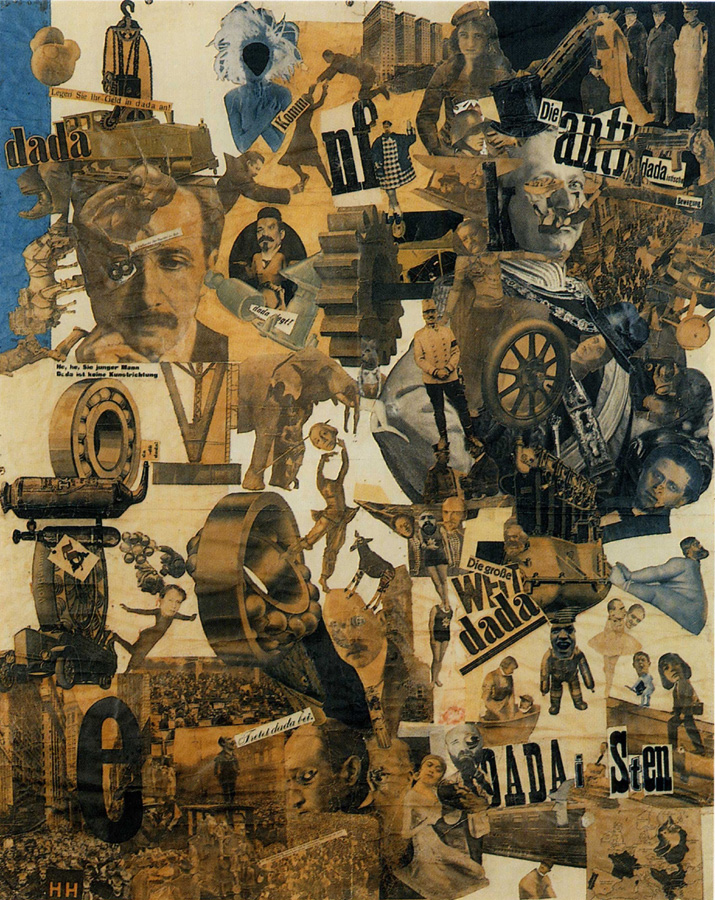
The Dadaist Paranormal School


by Greg Bishop
[from the foreword of The Other Side of Truth]
It is clear, then, that the idea of a fixed method, or of a fixed theory of rationality, rests on too naive a view of man and his social surroundings. To those who look at the rich material provided by history, and who are not intent on impoverishing it in order to please their lower instincts, their craving for intellectual security in the form of clarity, precision, objectivity, truth, it will become clear that there is only one principle that can be defended under all circumstances and in all stages of human development. It is the principle: anything goes. – Paul Feyerabend
The UFO subject is far more interesting than lights in the sky, people from other planets, or simple hoaxes and mis-identifications. Many are surprised about the verifiable connections between UFOs and other tabloid fodder such as psychic phenomena, ghosts, and liminal creatures like Bigfoot. Most people who claim to be researchers in these subjects are often insular about their particular areas of interest, sometimes to the point of open hostility when the similarities are noted. “Ufologists” (a misleading term for an unregulated discipline) routinely bristle at the mention of any strangeness outside of supposed aliens. They have been fighting a 50-year battle for respectability, and that other “junk” might make them look silly.

What they don’t seem to realize is that the vast majority of the public, particularly the arbiters of reality (primarily the media and academia), think it’s all silly. The public face of paranormal research has done itself few favors in this regard. The loudest and craziest person in the room nearly always controls the conversation, gets on the popular radio shows, or gets the big book or movie deal.

For many years, however, there have been a few voices amongst those who think deeply about the paranormal whose study of the subject has not been reducible to sound-bites or hackneyed expeditions conducted on television shows using night-vision cameras strapped to high-strung actors and so-called “experts” (whose mantra always seems to be, “Did you hear that?”).

This iconoclastic group of paranormal enthusiasts and researchers, such as Nick Redfern and the late Mac Tonnies, has been quietly cheerleading the unheralded insights of UFO and paranormal researchers like Jacques Vallee, Jim Brandon, John Keel, Jenny Randles, Greg Little and Graham Hancock, as well as the pioneering work of scientists such as Dean Radin, Robert Jahn, Richard Strassman, and Hal Puthoff.

Most UFO buffs and paranormal fans have never heard of these people, who have recorded their insights in books that largely remain unread, mainly because they downplay or outright reject the aliens-from-other-planets idea. The scientific viewpoint of credentialed academics such as those mentioned above is also routinely ignored because it doesn’t flatter the “new age” bias of most readers. It also seems that fewer people have the patience to wade through the entire text of a book anymore, which puts readers of the present volume in rare company.

Most people have self-imposed blinders on which keep them from seeing outside the narrow viewpoint of their own personal interests, experiences and opinions. Many are also unaware of the underlying sagas that have brought them, their societies, and humanity in toto to this point in history. Our past has taught us that almost nothing happens in a vacuum, and the present is the result of a tangled fabric of interconnected and often disparate stories. The paranormal is no different. 

We have always lived with an awareness of forces and influences that are not apparent to our five senses, observation over time, or simple deduction. Some of these forces were eventually found to have verifiable explanations, such as magnetism, electricity, the weather, the motions of planets, the flight of birds, and so on. Others, with a long history of anecdotal evidence, like meteorites or ball lightning, took longer to solve. Other more complex and esoteric elements of our world, such as those discussed herein, are still awaiting better methods and theories to explain them.

Those who are invested in a fixed way of looking at the world declare that since we have perfected all methods of verifying reality, then anything that does not conform to the current understanding of physical laws does not exist. The truly skeptical attitude would be to reserve judgment and declare certain issues “unproven.” Anything else veers perilously close to belief, not science.

A few pioneering individuals, such as the membership of the Society for Scientific Exploration, actively use the scientific tools currently available to test issues such as ESP, reincarnation, psychokinesis, UFO sightings, and other “fringe” subjects. They are aware of the pitfalls of belief and experimenter bias, as well as the issue of scientific peer pressure, the question of who pays the bills and what they want to hear, and the specter of fundamentalist skepticism. 

Then there are the rest of us, who look on and try to make sense of something that we are often told is not worth the time or effort to worry about. After many years of study, listening to paranormal radio shows and attending lectures, most either become disillusioned, or settle into some sort of belief system based on their hopes and wishes. There are a thoughtful few, however, who decide to treat the whole thing as a sort of journey of learning. Those are the voices worth listening to.

Paul Kimball is one of those people who have embarked upon this journey. He often examines the paranormal in terms of a creative viewpoint, or even as an artistic act. In light of this, much reported witness testimony of UFOs and other “paranormal” strangeness could actually be considered surrealist stories.

Paul Feyerabend was a philosopher of science, and author of the landmark book Against Method, wherein he put forward the argument that no progress can be made under inflexible rules, especially those of the scientific method. In a 1972 letter to a friend, Hungarian philosopher Imre Lakatos, Feyerabend declared his allegiance to the ideals of the Dadaist artistic movement of the early 20th century. His words could be instructive to the paranormal researcher and fan alike:
A Dadaist is utterly unimpressed by any serious enterprise and he smells a rat whenever people stop smiling and assume that attitude and those facial expressions which indicate that something important is about to be said. A Dadaist is convinced that a worthwhile life will arise only when we start taking things lightly and when we remove from our speech the profound but already putrid meanings it has accumulated over the centuries (“search for truth”; “defense of justice”; “passionate concern”; etc. etc.). A Dadaist is prepared to initiate joyful experiments even in those domains where change and experimentation seem to be out of the question.”
Perhaps after reading The Other Side Of Truth, I will now finally declare myself a student of the “Dadaist Paranormal School.” Maybe you will too.

New thinking such as that displayed by Paul is sorely needed in the paranormal field. I have seen his opinions greeted with open hostility on my radio show and elsewhere. Incredibly insane stories such as the U.S. President using a time machine to get to Mars, or culinary recipes channeled from historical figures, don’t garner half the vitriol that my good friend does. To me, that means he has something important to say that threatens the thoughtless.

Good.

Thursday, March 03, 2011

X-Zone tonight


A programming note: I'll be on the X-Zone radio show with Rob McConnell this evening, discussing ghosts (and Ghost Cases), consciousness, and other topics (I think religion may have come up when we pre-recorded this afternoon). I'm in the final segment, from 2 am to 3 am EST.

Paul Kimball

Sunday, February 13, 2011

Dave Sadler - Hook, Line and Sinker

Dave Sadler filming an episode of Ghost Cases at the Bridestones, May 2009.
In this episode recorded on 12 February, 2011, I discuss a wide range of subjects with my good friend Dave Sadler, of the Unknown Phenomena Investigation Association in the United Kingdom, including the state of British UFO research (and Dave's views on some of its leading researchers), the decline of interest by the public in UFOs vis-a-vis ghosts and other topics within the paranormal, the question of UFO hoaxes, and why at least some of them may not be such a bad thing, and the Berwyn Mountain UFO case from 1974 in Wales. Oh, yes... and why Dave hates psychics... but sees them as useful from time to time.

You can find out more about Dave, his great work with the UPIA, and Phenomena Magazine at the UPIA Website.


Thursday, September 02, 2010

Top 10 Myths of Popular Psychology

Hat tip to my friend, Dr. Angie Birt (pictured at left), an Assistant Professor of psychology at Mount St. Vincent University here in Halifax, Nova Scotia, for letting me know about this interesting article - Top 10 Myths of Popular Psychology.

Below I have excerpted the sections that I think are of particular relevance to paranormal researchers, who should be thinking about things like this each and every time they interview someone, or offer an opinion or conclusion as to some aspect of the paranormal based on eyewitness testimony.

Paul Kimball

Top Ten Myths of Popular Psychology

Virtually every day, the news media, television shows, films, and Internet bombard us with claims regarding a host of psychological topics: psychics, out of body experiences, recovered memories, and lie detection, to name a few. Even a casual stroll through our neighborhood bookstore reveals dozens of self-help, relationship, recovery, and addiction books that serve up generous portions of advice for steering our paths along life’s rocky road. Yet many popular psychology sources are rife with misconceptions. Indeed, in today’s fast-paced world of information overload, misinformation about psychology is at least as widespread as accurate information. Self-help gurus, television talk show hosts, and self-proclaimed mental health experts routinely dispense psychological advice that is a bewildering mix of truths, half-truths, and outright falsehoods. Without a dependable tour guide for sorting out psychological myth from reality, we’re at risk for becoming lost in a jungle of “psychomythology.”

In our new book, 50 Great Myths of Popular Psychology: Shattering Widespread Misconceptions about Human Behavior, we examine in depth 50 widespread myths in popular psychology (along with approximately 250 other myths and “mini-myths”), present research evidence demonstrating that these beliefs are fictional, explore their ramifications in popular culture and everyday life, and trace their psychological and sociological origins. Here, pace David Letterman, we present (in no particular order) our own candidates for the top 10 myths of popular psychology.

Myth #1: We Only Use 10% of our Brains
Whenever those of us who study the brain venture outside the Ivory Tower to give public lectures, one of the questions we’re most likely to encounter is, “Is it true that we only use 10% of our brains?” The look of disappointment that usually follows when we respond, “Sorry, I’m afraid not,” suggests that the 10% myth is one of those hopeful truisms that refuses to die because it would be so nice if it were true. In one study, when asked “About what percentage of their potential brain power do you think most people use?,” a third of psychology majors answered 10%. Remarkably, one survey revealed that even 6% of neuroscientists agreed with this claim! The pop psychology industry has played a big role in keeping this myth alive. For example, in his book, How to be Twice as Smart, Scott Witt wrote that “If you’re like most people, you’re using only ten percent of your brainpower.”
There are several reasons to doubt that 90% of our brains lie silent. At a mere 2–3% of our body weight, our brain consumes over 20% of the oxygen we breathe. It’s implausible that evolution would have permitted the squandering of resources on a scale necessary to build and maintain such a massively underutilized organ. Moreover, losing far less than 90% of the brain to accident or disease almost always has catastrophic consequences. Likewise, electrical stimulation of sites in the brain during neurosurgery has failed to uncover any “silent areas.”

How did the 10% myth get started? One clue leads back about a century to psychologist William James, who once wrote that he doubted that average persons achieve more than about 10% of their intellectual potential. Although James talked in terms of underdeveloped potential, a slew of positive thinking gurus transformed “10% of our capacity” into “10% of our brain.” In addition, in calling a huge percentage of the human brain “silent cortex,” early investigators may have fostered the mistaken impression that what scientists now call “association cortex” — which is vitally important for language and abstract thinking — had no function. In a similar vein, early researchers’ admissions that they didn’t know what 90% of the brain did probably fueled the myth that it does nothing. Finally, although one frequently hears claims that Albert Einstein once explained his own brilliance by reference to 10% myth, there’s no evidence that he ever uttered such a statement.
Myth #4: Human Memory Works like a Video Camera

Despite the sometimes all-too-obvious failings of everyday memory, surveys show that many people believe that their memories operate very much like videotape recorders. About 36% of us believe that our brains preserve perfect records of everything we’ve experienced. In one survey of undergraduates, 27% agreed that memory operates like a tape recorder. Even most psychotherapists agree that memories are fixed more or less permanently in the mind.

It’s true that we often recall extremely emotional events, sometimes called flashbulb memories because they seem to have a photographic quality. Nevertheless, research shows that even these memories wither over time and are prone to distortions. Consider an example from Ulric Neisser and Nicole Harsch’s study of memories regarding the disintegration of the space shuttle Challenger. A student at Emory University provided the first description 24 hours after the disaster, and the second account two and a half years later.

Description 1. “I was in my religion class and some people walked in and started talking about [it]. I didn’t know any details except that it had exploded and the schoolteacher’s students had all been watching which I thought was so sad. Then after class I went to my room and watched the TV program talking about it and I got all the details from that.”

Description 2. “When I first heard about the explosion I was sitting in my freshman dorm room with my roommate and we were watching TV. It came on a news flash and we were both totally shocked. I was really upset and I went upstairs to talk to a friend of mine and then I called my parents.”

Clearly, there are striking discrepancies between the two memories. Neisser and Harsch found that about one-third of students’ reports contained large differences across the two time points. Similarly, Heike Schmolck and colleagues compared participants’ ability to recall the 1995 acquittal of former football star O. J. Simpson 3 days after the verdict, and after many months. After 32 months, 40% of the memory reports contained “major distortions.”

Today, there’s broad consensus among psychologists that memory isn’t reproductive — it doesn’t duplicate precisely what we’ve experienced — but reconstructive. What we recall is often a blurry mixture of accurate and inaccurate recollections, along with what jells with our beliefs and hunches. Indeed, researchers have created memories of events that never happened. In the “shopping mall study,” Elizabeth Loftus created a false memory in Chris, a 14-year-old boy. Loftus instructed Chris’s older brother to present Chris with a false story of being lost in a shopping mall at age 5, and she instructed Chris to write down everything he remembered. Initially, Chris reported very little about the false event, but over a two week period, he constructed a detailed memory of it. A flood of similar studies followed, showing that in 18-37% of participants, researchers can implant false memories of such events as serious animal attacks, knocking over a punchbowl at a wedding, getting one’s fingers caught in a mousetrap as a child, witnessing a demonic possession, and riding in a hot air balloon with one’s family.

Myth #5: Hypnosis is a Unique “Trance” State Differing in Kind from Wakefulness

Popular movies and books portray the hypnotic trance state as so powerful that otherwise normal people will commit an assassination (The Manchurian Candidate); commit suicide (The Garden Murders); perceive only a person’s internal beauty (Shallow Hal); and (our favorite) fall victim to brainwashing by alien preachers who use messages embedded in sermons (Invasion of the Space Preachers). Survey data show that public opinion resonates with these media portrayals: 77% of college students endorsed the statement that “hypnosis is an altered state of consciousness, quite different from normal waking consciousness,” and 44% agreed that “A deeply hypnotized person is robot-like and goes along automatically with whatever the hypnotist suggests.”

But research shows that hypnotized people can resist and even oppose hypnotic suggestions, and won’t do things that are out of character, like harming people they dislike. In addition, hypnosis bears no more than a superficial resemblance to sleep: Brain wave studies reveal that hypnotized people are wide awake. What’s more, individuals can be just as responsive to suggestions administered while they’re exercising on a stationary bicycle as they are following suggestions for sleep and relaxation. In the laboratory, we can reproduce all of the phenomena that laypersons associate with hypnosis (such as hallucinations and insensitivity to pain) using suggestions alone, with no mention of hypnosis. Evidence of a distinct trance unique to hypnosis would require physiological markers of subjects’ responses to suggestions to enter a trance. Yet no consistent evidence of this sort has emerged.

Hypnosis appears to be only one procedure among many for increasing people’s responses to suggestions.

Myth #6: The Polygraph Test is an Accurate Means of Detecting Lies

Have you ever told a lie? If you answered “no,” you’re lying. College students admit to lying in about one in every three social interactions and people in the community about one in every five interactions. Not surprisingly, investigators have long sought out foolproof means of detecting falsehoods. In the 1920s, psychologist William Moulton Marston invented the first polygraph or so-called “lie detector” test, which measured systolic blood pressure to detect deception. He later created one of the first female cartoon superheroes, Wonder Woman, who could compel villains to tell the truth by ensnaring them in a magic lasso. For Marston, the polygraph was the equivalent of Wonder Woman’s lasso: an infallible detector of the truth.

A polygraph machine plots physiological activity — such as skin conductance, blood pressure, and respiration — on a continuously running chart. Contrary to the impression conveyed in such movies as Meet the Parents, the machine isn’t a quick fix for telling whether someone is lying, although the public’s desire for such a fix almost surely contributes to the polygraph’s popularity. In one survey of introductory psychology students, 45% believed that the polygraph “can accurately identify attempts to deceive.” Yet interpreting a polygraph chart is notoriously difficult.

For starters, there are large differences among people in their levels of physiological activity. An honest examinee who tends to sweat a lot might mistakenly appear deceptive, whereas a deceptive examinee who tends to sweat very little might mistakenly appear truthful. Moreover, as David Lykken noted, there’s no evidence for a Pinocchio response, such as an emotional or physiological reaction uniquely indicative of deception. If a polygraph chart shows more physiological activity when the examinee responds to questions about a crime than to irrelevant questions, at most this difference tells us that the examinee was more nervous at those moments. Yet this difference could be due to actual guilt, indignation or shock at being unjustly accused, or the realization that one’s responses to questions about the crime could lead to being fired, fined, or imprisoned. Thus, polygraph tests suffer from a high rate of “false positives” — innocent people whom the test deems guilty. As a consequence, the “lie detector” test is misnamed: It’s really an arousal detector. Conversely, some individuals who are guilty may not experience anxiety when telling lies. For example, psychopaths are notoriously immune to fear and may be able to “beat” the test in high pressure situations, although the research evidence for this possibility is mixed.

Were he still alive, William Moulton Marston might be disappointed to learn that researchers have yet to develop the psychological equivalent of Wonder Woman’s magic lasso. For at least the foreseeable future, the promise of a perfect lie detector remains the stuff of comic book fantasy...
About the authors

Dr. Scott O. Lilienfeld is a Professor of Psychology at Emory University, editor-in-chief of the Scientific Review of Mental Health Practice, and past president of the Society for a Science of Clinical Psychology. His principal areas of interest include personality disorders, psychiatric classification, evidence-based practice in clinical psychology, and science and pseudoscience.
Dr. Steven Jay Lynn is a Professor of Psychology at Binghamton University (SUNY), the director of the Psychological Clinic and the Center for Evidence-Based Therapy, and a diplomate in clinical and forensic psychology (ABPP). He is the author of more than 270 books, chapters, and articles on science versus pseudoscience, hypnosis, memory, dissociation, and psychological trauma.

Dr. John Ruscio is an Associate Professor of Psychology at The College of New Jersey. His interests include quantitative methods for social and behavioral science research and characteristics distinguishing science from pseudoscience.
Dr. Barry L. Beyerstein was Professor of Psychology in Simon Fraser University, and an internationally recognized expert on myths about brain functioning. Dr. Bernstein passed away in 2007.

Sunday, August 29, 2010

"Field Research" 101 - Interviewing witnesses

Most self-proclaimed UFO / paranormal "field Investigators" have absolutely no training or education in oral research methodology. Not having had this training or education, and yet having gone out into the "field" to conduct "investigations", they presumably don't see the need for it.

They're wrong.

An understanding of oral research methodology is key to being an effective and reliable interviewer of witnesses. A few years ago, I posted several tips and resources on the subject. After reading some posts at the message forums at the Paracast, and listening to some recent episodes at the show, I have been reminded me of the paucity of understanding of true research methodology by "ufologists / paranormal researchers".

I think a refresher course is in order.

Paul Kimball

Oral History Tips

Any paranormal researcher serious about oral history would be well served to begin their preparation with Concordia University's Oral History Tips, which offers a good basic primer on everything from interview guidelines and sample questions to ethics guidelines and tips.

In the meantime, here are some key questions to ask yourself before ever heading out into the "field":

Technique and Adaptive Skills

1. In what ways does the interview show that the interviewer has used skills appropriate to: the interviewee's condition (health, memory, metal alertness, ability to communicate, time schedule, etc.) and the interview location and conditions (disruptions and interruptions, equipment problems, extraneous participants, background noises, etc.)?

2. What evidence is there that the interviewer has: thoroughly explored pertinent lines of thought? followed up on significant clues? Made an effort to identify sources of information? Employed critical challenges when needed? Thoroughly explored the potential of the visual environment, if videotaped?

3. Has the progam/project used recording equipment and media that are appropriate for the purposes of the work and potential nonprint as well as print uses of the material? Are the recordings of the highest appropriate technical quality? How could they be improved?

If videotaped, are lighting, composition, camera work, and sound of the highest appropriate technical quality?

4. In the balance between content and technical quality, is the technical quality good without subordinating the interview process?
These are the kinds of questions that ufologists HAVE to ask themselves before and after conducting interviews.

Interviewing Sins & Useful Advice

From An Archive Approach to Oral History (1978, at. pp. 15 - 16) by David Lance, at the time Keeper of the Department of Sound Records at the Imperial War Museum, some "sins" which interviewers should always avoid:
Interviewing Sins

1. Questions which are unnecessarily too long;

2. Questions which are not clear;

3. Questions, too frequently, which are answerable by "yes" or "no";

4. Combining several questions into one;

5. Interrupting a speaker with a secondary question before he has finished answering the first;

6. Failing to follow-up on a question which has not been fully answered;

7. Seeking, too often, for opinions and attitudes (particularly without establishing any factual basis for them);

8. Missing opportunities for follow-up questions which are "invited" by earlier answers;

9. Not asking for specific examples to illustrate general points which an informant has made; and

10. Jumping to and fro between one subject and another, or one time period and another.
Lance also offered these useful pieces of advice:
Generally, the degree of useful information in a recording is in direct proportion to the amount of interview preparation that has been carried out.

Interviews most conveniently follow a chronological pattern; start at the beginning and work systematically through the period which the particular project is concerned with.
Do not hurry the interview process. The pace of an interview depends mainly on the informant's personal capacity; the length depends on the amount of useful information he has to give. There should be no other personal factors to consider in deciding how much time to devote to each informant.
The purpose of oral history interviewing and recording is to collect interesting and significant information by questioning men and women about their personal experiences within prescribed subject areas. Interviews should be based mainly on activities or events in which informants were directly involved.
And finally, my favourite, which all SETI types and debunkers who think witness testimony is worthless should be forced to read; here, Lance quoted from Sir Basil Liddell-Hart, one of the great historians of the 20th century:

"History should be tested by the personal witness of those who took part in the [events]... The more that any writer of history has himself been... in contact with the makers, the more does he come to see that a history based solely on formal documents is essentially superficial."

Absolutely, one hundred per cent, true. However, in order to accomplish this goal, it is critical to remember that the researcher has to get it right in the field.

Oral History - A Starting Point for Ufologists

A ufologist who wants to interview witnesses owes it to himself, the interviewees, and ufology in general, to familiarise himself with oral research methodology. In "Q & A 101" I touched briefly upon some types of questions, and the general approach used by lawyers to interviewing / questioning witnesses.

The study of history shares much with the legal method, but can differ in some important respects as well. The following sources are excellent starting points for any ufologist genuinely interested in learning the nature of oral research methodology, which is a necessity if they want to have their work taken seriously.

Baum, Willa K. Transcribing and Editing Oral History (Nashville: American Association for State and Local History, 1977).

Davis, Cullom et al. Oral History: From Tape to Type (Chicago: American Library Association, 1977).

Dunaway, David K. and Willa K. Baum, eds., Oral History: An Interdisciplinary Anthology (London: Altamira Press, 1996).

Grele, R. J. Envelopes of Sound: The Art of Oral History 2nd Ed. (Chicago: Precedent Publishers, 1985).

Lance, David. An Archive Approach to Oral History (London: Imperial War Museum, 1978).

McMahan, Eva M. and Kim Lacy Rogers, eds. Interactive Oral History Interviewing (Hillsdale, New Jersey: Lawrence Erlbaum Associates, 1994).

Thompson, Paul. The Voice of the Past: Oral History 2nd Ed. (New York: Oxford University Press, 1988).

Vansina, Jan. Oral Tradition: A Study in Historical Methodology (London: Routldge & Kegan Paul, 1965).

I offer the following sage words of wisdom from Cullom Davis, Kathryn Back and Kay MacLean, from Oral History: From Tape to Type, at. p. 8:
Collecting oral history requires proficiency in such specialized skills as historical research, equipment operation, and interviewing; it also demands sensitivity, alertness and empathy on the part of the interviewers. Contrary to popular impression, preparation and interviewing can be tedious and tiring work, and sometimes even unproductive. Veteran oral historians have had their share of unsuccessful projects, and a bad interview will always remain a bad interview. Of some consolation (as well as anxiety) is the fact that collecting, if not the totality, is the sine qua non of oral history. Without a taped interview one can never have a transcript or a bound oral history memoir. Collecting is the crucial first stage of oral history and therefore it deserves careful attention and extensive practice by the novice.
Q & A 101

There are a number of methodological problems within ufology. To me, however, the most serious relates to the process of interviewing people who may or may not have something to offer to the study of the UFO phenomenon (these people are often, and incorrectly, as I have pointed out elsewhere, referred to as "witnesses" by ufologists).

There are many different ways to ask a person a question, or a series of questions. There is no one, absolutely correct way to do it - for example, a defense lawyer cross-examining a prosecution witness will often use leading questions, often requiring a simple "yes" or "no" answer, whereas, as a general rule, he is not permitted to use leading questions when examining his own witness (there are, as always, a number of specific exceptions that prove the rule); instead, he would use open-ended questions.

There are reasons for this rule, which can be discerned from an examination of both the types of questions that can be asked, and the effect they can have on the "witness" testimony that is given as a result.

For the purposes of ufology (and borrowing from Legal Interviewing and Counselling by David Binder and Susan Price), here are four basic categories of questions of which ufologists should be aware:

1. Open-ended questions - In general, questions can be classified in terms of the breadth of information that they seek to elicit from the interviewee. At one end of the spectrum are open-ended questions, which allow the interviewee to select the information related to a general subject which he believes is pertinent and relevant. A ufological example might go something like this: "Could you tell me what you observed on the mesa that day?"

2. Leading questions - At the opposite end of the spectrum is the leading question.The structure of this type of question provides all the data which the interviewer believes is pertinent or relevant. The question makes a statement and, in addition, suggests that the interviewee ought to affirm the validity of the statement. A ufological example might go something like this: "You saw a flying saucer on the mesa that day, did you not?"

Between the totally open-ended question at one end of the spectrum, and the absolutely leading question at the other end, there may be an infinite variety in the forms of question. There are, however, two other significant types of questions:

3. The Yes / No Question - These are phrased in such a way that the interviewee can respond with a simple "yes" or "no." A ufological example might be: "Were there police officers on the mesa?"

4. Narrow Questions - Narrow questions both select the general subject matter, and choose which aspect of the subject the interviewer wishes to discuss. In restricting the interviewee to discussing that aspect of the general subject which the interviewer has selected, the interviewer is asking the interviewee to put aside whatever notions he might have as to the importance of information, and adopt instead the priorities of the interviewer. A ufological example might be: "How old were the police officers that you saw?"
As a general rule of thumb, ufological interviewers should begin with, and try to stick to, as much as possible, open-ended questions; narrow questions can be employed to focus in on particular pieces of information for which the interviewer would like further clarification. The goal should be to use these two types of questions to elicit as much information as possible from the interviewee, without distorting the answer.

This last consideration should be paramount. There are many ways in which the type of questions that are asked can influence the accuracy with which interviewees recall and relate information. Here are four of which ufologists should be especially aware:

1. Improper use of leading questions - Assuming the interviewer knows best, the interviewee will often go along with the interviewer's suggestion rather than indicating he does not know the answer, or is unsure of the answer. By an unconscious use of leading questions, the interviewer can unwittingly lead an interviewee into adopting a favourable but ultimately inaccurate view of the event or situation being discussed.

2. Pressuring the interviewee for too much detail - People do not perceive all of the details of any given event; therefore, they cannot usually report precisely everything that occurred. When pressed for too much detail, they will often "fill in" the details they can't remember by taking what they can recall of the event, and then using logic to reconstruct the event by imagining details that would be consistent with the facts that they do remember. This is usually an unconscious process. An interviewer who states in advance what he believes happened, or who asks leading questions, may inadvertently encourage an interviewee to "reconstruct" events to fit in with the interviewer's version.

3. Obtaining conclusions which distort - In some instances, asking a person for a conclusion before obtaining the details on which the conclusion is based can lead to distortion. For example, if the interviewee is first asked, "Do you believe that flying saucers have crashed, and that the government has recovered them?" the person's "yes" or "no" answers may shape his subsequent reporting of a specific alleged crash retrieval case.

4. The use of too many narrow questions - As stated above, the focus of the interview should be to allow the interviewee to tell his story in his words, as fully as he can recall it. Unless he is given this opportunity, which can best be accomplished through open-ended questions, certain facts and details will often not emerge. As a consequence, the story he relates might be more limited than it otherwise would have been.
After all, as Mr. Justice Beck, of the Alberta Court of Appeal, wrote in Maves v. Grand Trunk Pacific Railway Company (1913), 14 D.L.R. 70, 73 - 77 (Alta C.A):

"The chief rule of practice relative to the interrogation of witnesses is that which prohibits 'leading questions,' ie. questions which directly or indirectly suggest to the witness the answer he is to give. The rule is, that on material points a party must not lead his own witness... if he were allowed to lead, he might interrogate in such a manner as to exact only so much of the knowledge of the witness as would be favourable to his side, or even put a false gloss upon the whole."

Common sense then; common sense now.