Wednesday, July 06, 2011

Pop Matters: Smiths & Housemartins, "This Charming Caravan"


Apropos of nothing, really, other than me thinking this is absolutely awesome. My two favourite English bands of the 80s, and two of my favourite songs by them mashed up together.

I'll send this out to good pal and fellow traveler Nick Redfern, who I know is a huge fan of both The Smiths and The Housemartins, and who has just sent me a copy of his new MIB book for review.

See... it's apropos of something after all!

Paul Kimball

Tuesday, July 05, 2011

Pop Matters: The Northern Pikes, "Unimportant"

A thought-provoking pop gem from the great Canadian band The Northern Pikes.


No matter how different we may seem to each other in this life, we're all headed for the same end, and a final equality. In our shared "unimportance" lies a recognition of our true humanity - and the beginnings of an awareness of our our real importance.

Paul Kimball

The Morality Pill


Apropos of Evolving Consciousness, Empathy and Advanced Hon-Human Intelligence, a post I wrote back in late April, there's a thought-provoking opinion piece in today's Globe and Mail that I recommend to everyone - Would We Swallow A Morality Pill, by Guy Kahane, who is deputy director of the Uehiro Centre for Practical Ethics at the University of Oxford. Kahane asks the following question: Should we use our growing scientific understanding of the basis of human morality to try to make people morally better?

Here's an excerpt:
It would be ideal if individuals could freely explore different ways to improve themselves, whether by practising mindfulness, reading moral philosophy or, yes, by taking a “morality” pill. But it’s also true that, although some people are eager to take pills that make them feel better, it’s not so obvious that people would want to take pills that would make them morally better. It’s not clear people really want to be morally better. And those who, like the psychopathic Alex [of A Clockwork Orange], need the most help are probably those who would want it least.
Well worth a look, and then consideration, less so for the idea that an actual "morality pill" might be invented than for the question that Kahane leaves the reader with:

"Will we want to take them if they ever become available? And what does it say about us if we won't."

Paul Kimball

Monday, July 04, 2011

Synchronicity


Long before my recent Los Angeles run of what Walter Bosley called "synchronicities", I actually made a performance film for Bravo here in Canada called - you guessed it - Synchronicity. This film featured pianist Heather Schmidt and cellist Shauna Rolston, talking about their friendship and creative collaboration, and performing music written by Schmidt, including a piece I specifically commissioned for the film titled - you guessed it again - "Synchronicity".

In the context of the paranormal, and the possibility of interaction with an advanced non-human intelligence, I think Shauna's comments about communication, and the relationship between the composer and the musician as interpreter, are particularly interesting.

Heather and Shauna also talk about how they "fit together". I always wonder whether these kinds of things are just coincidences, or whether there might be something more at work. Do we just get lucky when we meet people with whom we have a connection, or do we meet these people for a reason? Perhaps, if you give any credence to the idea of reincarnation, we travel through our "lives" linked to the same group of people, each of us fulfilling a different role in the next life (my dad, for example, might be my son or daughter in the next life, or my best pal). Maybe that's why, when you first meet someone and feel like you've known them your whole life, you have - just not this "life", but one before... or, if you see time not as a linear construct but more of a circle, then perhaps a "life" still to come.

That would be the ultimate synchronicity.

Paul Kimball

Friedman on Sagan, NASA, Project Blue Book, space exploration

Over the past couple of years, I posted several clips from a pre-interview I conducted with Stan Friedman in 2000 (while researching the documentary Stanton T. Friedman is Real), but I finally got around to putting them all into one video this past weekend.


Stan discusses a number of subjects, including Carl Sagan, Project Blue Book, space travel, and NASA.

Paul Kimball

Friday, July 01, 2011

Canada Day


In honour of Canada Day, here I am in 1990 proudly wearing the uniform of the Royal Canadian Mounted Police, while stationed at Ingonish Beach, Nova Scotia.

Paul Kimball

Tuesday, June 28, 2011

Denise Djokic: Seven Days, Seven Nights


Of all the films that I've done over the years, my 2002 documentary on Canadian cellist Denise Djokic and her tour through northern British Columbia with pianist David Jalbert remains my favourite.

Everytime people like Denise and David play, I think they're opening a doorway to a better world... and perhaps a different world, and the "other" that may inhabit it.

Paul Kimball

Merci beaucoup


Zorgrot and I at Rendlesham filming Best Evidence, May 2006.

Sometime today, the statcounter that measures the unique viewers that this blog has had over the years will turn over on 600,000. Zorgrot and I just want to take a moment to say thanks for popping by at some point since I began The Other Side of Truth back in 2005.

Paul Kimball

Filmmaking 101, Vol. I

Nobody knows how hard it is to get a feature film funded, and then made, more than I do (apropos of Eternal Kiss, which will be an entire chapter someday in my autobiography). In that light, I present the following to you for your consideration:


Of course, this has nothing to do with the paranormal, so just file it under "life and how to live it", and then check out Jeremy Vaeni's Kickstarter page for his film Free Space, and consider making a contribution.

Paul Kimball

Monday, June 27, 2011

The Visions of William Blake

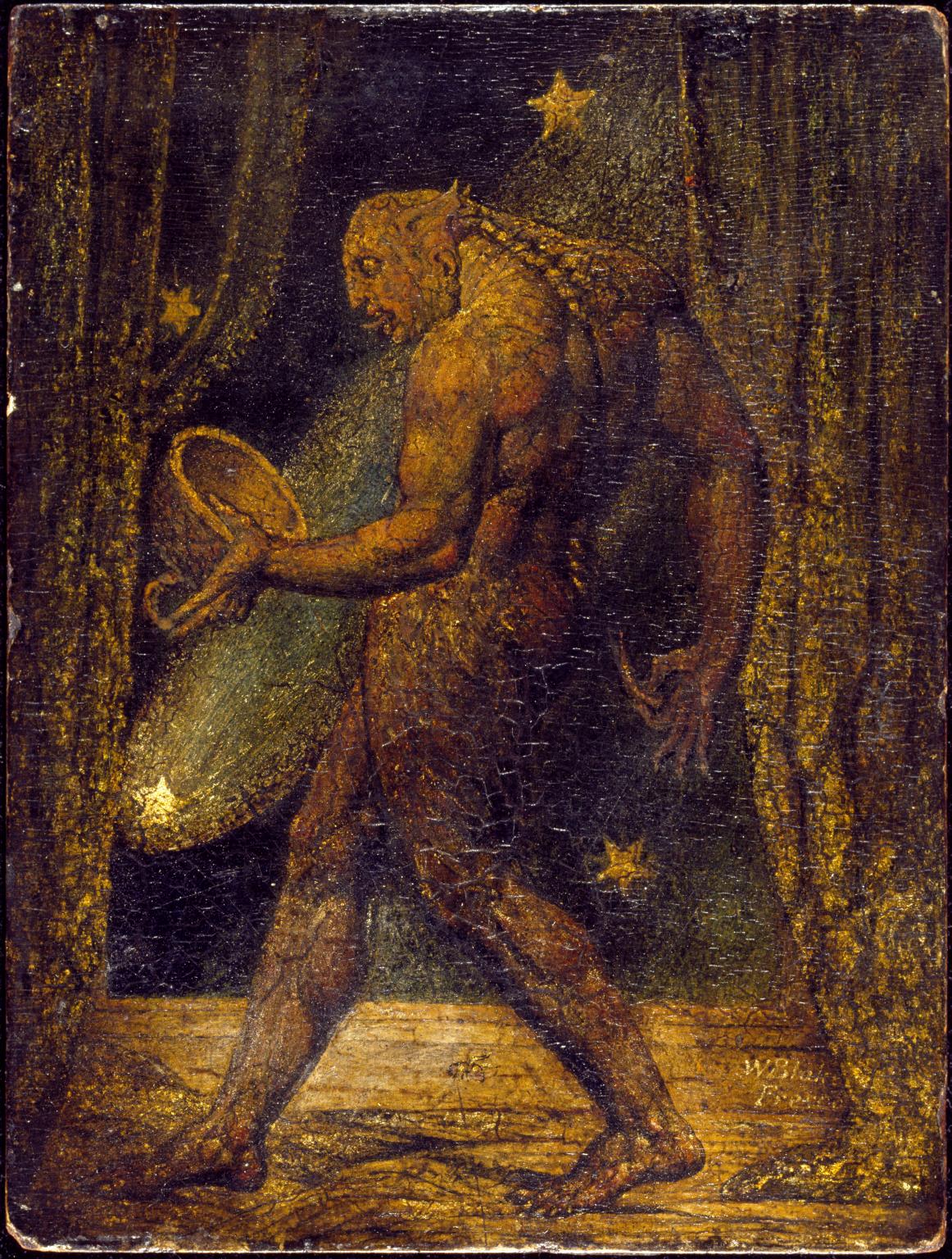
William Blake's "The Ghost of a Flea"
Astrologer and artist John Varley reported that his friend William Blake, who had experienced visions since his childhood, once had a vision of a ghost of a flea at a seance the two held in 1819. According to Varley:

As I was anxious to make the most correct investigation in my power, of the truth of these visions, on hearing of this spiritual apparition of a Flea, I asked him if he could draw for me the resemblance of what he saw: he instantly said, 'I see him now before me.' I therefore gave him paper and a pencil with which he drew the portrait... I felt convinced by his mode of proceeding, that he had a real image before him, for he left off, and began on another part of the paper, to make a separate drawing of the mouth of the Flea, which the spirit having opened, he was prevented from proceeding with the first sketch, till he had closed it.
I highly recommend this New York Times article from 1910 about Blake, his visions and the art that he created as a result. As the Times notes, "Whatever guess we make at the mighty puzzle of this power of vision, one thing is certain. Blake would have been a pale and ineffectual artist without it, and with it he contributed a poignant and enduring force to art."

One can only wonder what kind of diagnosis (and then treatment) a psychiatrist would make today were he confronted with someone like Blake, and the visions that he described. Fortunately, Blake lived in a time well before our modern world of corporatized and commercialized conformity, and was therefore able to use his visions - whatever might have caused them - as the inspiration for his art, his poetry and his philosophy, all work that remains hugely influential to this day.

If there is an "other", advanced non-human intelligence, then I suspect that this is how it communicates with us - through visions. If this is the case, then I believe that we would all have the ability to receive that communication, in some form or another, but that the vast majority of us do not have the willingness to access that ability, largely because we're afraid of what it might represent, namely a loss of control. We want to "fit in" to society as it is structured around us (the ultimate control mechanism), but by fitting in we may be missing out on something far more important, and meaningful - the ability to truly be free.

Paul Kimball

Sunday, June 26, 2011

Kaku on UFOs


There's nothing new in this clip of Kaku being interviewed on MSNBC last year, but still it provides a good, short summarization of his views on the UFO phenomenon.

Paul Kimball

Saturday, June 25, 2011

Within the Fire, You Find the Rain


Back in the 1990s, when I was in law school, and then a musician (and also in grad school), my best friend Peter Black and I used to drink "on occasion", during which time would discuss all things metaphysical, mystical and philosophical (we still do this, but far less frequently, alas). I wrote a song about our otherworldly conversations, called "A Drawing Down" (the title came from a line in the Wilfred Owen poem "Anthem for Doomed Youth"), and our view that society (and most of the people within it) had become  hollow,  too wrapped up in bread & circuses, and lacking a meaningful direction, or awareness of a "bigger" picture.  Peter and I weren't particularly settled on what that "bigger" picture should or could be, only that people should be looking for it in places other than those deemed socially acceptable by the powers-that-be, and that there was no one answer, or path, that people should follow - rather, there were parts of almost every path that could lead to insight and form part of the greater whole.

Accordingly, the conversation would range from Marxism to Christian mysticism to Aleister Crowley, and many points in between, off to the side, and over the proverbial fence. From time to time, we would light a little fire in the center of the room and try to commune with the elder gods, should they exist in some form and still be in the practice of accepting calls. To this day, I'm not sure that we ever got an answer, although we did have a pretty strange experience with a ouija board once, but I am sure that one should never attempt to put out a fire in the middle of a room with a glass full of vodka. I definitely consider that a bullet dodged!

Anyway, here are two versions of that song by my old band, Julia's Rain - the first is the original, harder-edged version (which we eventually released on an e.p. called "notes from underground"), while the second is a jazzier, more acoustic version taht we played at a live fundrasiing gig for radio station CKDU.


The lyrics were:

I read the news today -
I really thought it would mean something to me,
but stranger tales, well I have heard
nothing that happens seems to make me anymore,
just round and round it goes
through my revolving door.

I heard a song today -
I really thought it would mean something to me,
but truer songs, well I have heard
nothing they write seems to touch me anymore,
just the words going in and out
through my revolving door.

Candles burning on the floor
and Aleister Crowley is knocking at my door,
come around, come around
to this drawing down,
on this "unholy" ground
come see what I have found.

I heard a voice today -
I really thought it would mean something to me,
but stronger voices, well I have heard
nothing they say seems to move me anymore,
just the Word going in and out
through my revolving door.
I wasn't the only one drawing upon a wide variety of literary influences for musical inspiration back then, however. Another of my best friends, John Rosborough, fronted a band called The Fourth Wall, with whom my various bands played frequently, and like me he looked to the Beats and mystics for inspiration, as well as philosophers and poets such as William Blake. Beltane Born, the title of the band's one full-length CD release, also gives a hint to some of the more mystical elements of John's writing.

John and I on a shoot in northern British Columbia, 2002.
Like me, John now works in the film & television industry here in Halifax, as a producer / director / writer, and from time to time he still plays with The Fourth Wall. You can find their website and some of their music here - I recommend "The Wizard" in particular, wherein John writes, "What do you want to be now, what do you want to see now?"

John Rosborough playing with The Fourth Wall.
With Peter, John and I, it has never been about coming up with "the answer" - rather, it's been about asking as many questions as possible, because none of us think there's just one "answer". We've always been looking for "the other side of truth", cognizant that it's the journey that really is the destination. It's been a journey that has taken us all to some strange places (in the case of Peter and I, usually a cemetery late at night). I could relate the story of how John and I were almost eaten by a bear in the wilds of northern British Columbia (a personal favourite for the sheer absurdity of it), but I prefer the story of a night out in San Juan, Puerto Rico, whilst filming "Fields of Fear" back in 2006.

John with Nick Redfern and researcher Orlando Pla
on location in rural Puerto Rico, 2006.
The rest of the crew had settled into the hotel for the evening (along with Nick Redfern, who had gotten ill from a tuna salad sandwich he had eaten in Mayaguez earlier that day), while John and I headed out into old town, where we moved from small bar to small bar, and wandered down the dimly lit streets with no real purpose other than curiosity. I remember walking down one street, and realizing that John had stopped to look down an alleyway. I motioned him to leep going, but he said "have a look." I did, and down that alley was some sort of house party going on. He suggested we wander down and have a look... so we did. I won't relate the rest of the night's adventures, in the interests of maintaining a PG friendly readership, other than to say that we should all be willing to just head down the alleyways of life and see what we find there.

As Blake wrote: "The road of excess leads to the palace of wisdom; for we never know what is enough until we know what is more than enough."

That journey continues tonight for John and I at a local watering hole, where we will no doubt be talking about James and Kerouac and Bukowski, the elder gods, and life and how to live it. As he wrote in the Fourth Wall song "Find the Rain":

"within the fire, you find the rain."

Let it rain.

Paul Kimball

A Great Link

American biologist Craig Venter is best known for his key roles in being part of the team that sequenced the human genome, and in 2010 for announcing that a team led by him had created the first self-replicating synthetic life, by synthesizing a very long DNA molecule containing an entire bacterium genome, and introducing this into another cell.


He's also a man who has previously expressed an interest in extraterrestrial life.


So it should probably come as no surprise that he seems to be interested in combining the two. DARPA has just announced the 100 Year Spaceship Program, a blue-sky project which aims to enable a manned journey between the stars sometime in the next century or so. One of the proposals that has been floated, and is receiving a notice in virtually all of the press articles about the project, is Venter's notion of reconstituting humans from genomes launched into outer space.

Now, this is a very, very small program (the award for the best idea to carry forward is only $500,000, a drop in the bucket of military-industrial-scientific research), but this is the kind of thing that can stir the private sector to go far further, because it gives the whole idea an air of intellectual legitimacy. One can also assume that if this is what DARPA is willing to discuss publicly, then privately they are already working away on all sorts of ideas along this line. Any number of other government agencies are probably doing the same thing.

That's all beside the point for me, however. My "take away" from this news, and in particular Venter's idea, is that is we can imagine doing it, and leading scientists and entrepreneurs take the ideas seriously, then we should also consider the possibility that someone else, "out there", has also imagined all of these possibilities... and then actually made some of them happen.

Which leads one to consider Venter's idea, perhaps the most interesting of them all. If we can imagine seeding other worlds with the human genome, and reconstituting the human race there (a plan which obviates the need to worry about how to get there, because we could someday send thousands of ships at subluminal speeds throughout our galactic neighborhood, without needing to be concerned about how long it would take to get to distant worlds), then perhaps "we" already have - if not quite in a galaxy "far far away", then on a world "far far way".


In Canada, we all look to other parts of our world for our ancestors, whether it be England, Scotland, Germany, Italy, India, or if you go back far enough for the aboriginals, Asia. But what if we could all look somewhere else for our true ancestors - to the stars? What if billions of years ago, a quirky group of blue-sky human dreamers somewhere else in our galaxy (or even another galaxy, if we go back far enough), came up with the same idea that Venter has come up with... and then actually made it work?


And so perhaps here we are, getting ready not to travel to the stars for the first time and as a unique species, but rather getting ready to continue the journey that the human race began long ago, a link in a great, never-ending chain of life.

Paul Kimball

Friday, June 24, 2011

Art and Opening the Barriers to Communication

From Stephanie Steele, a wonderful Nova Scotia artist and Facebook friend of mine, a series called "... the stars land?" that I quite like.


As Greg Bishop and I have discussed more than once (particularly in the "Nothing but flowers..." episode of The Other Side of Truth podcast embedded below), art and music have the unparalleled potential to transcend the barriers to true communication that language and culture impose on us.


Here's another example of Stephanie's work that I really like, and that "speaks" to me as a disciple of Kerouac and Bukowski and the rest of the "Beats"...


As always with art, what it says to me might not be the same thing as what it says to you, because the conversation that art and music inspires in people is the most important one of all - the conversation that we have with ourselves. This is why I consider art, in all its myriad forms, to be the highest of callings in a world desperately in need of real communication, and a new Enlightenment.

Paul Kimball

Brainwashed

Completing the week of George Harrison songs is the title track from his final album, Brainwashed, which was released in 2002, a year after Harrison passed away.


Harrison included a passage from How to Know God: The Yoga Aphormisms of Patanjali that I've always thought was fitting, and a nice summary of everything that Harrison stood for, and wrote about.
The soul does not love. It is love itself
It does not exist. It is existence itself
It does not know. It is knowledge itself
I'm not a practioner of yoga, but I do my best to adhere to the precepts set out by Henry David Thoreau in Walden, particularly with the respect of finding moments in every day to be with yourself and your thoughts, in order to discover and stay in touch with who you really are. 

We've all been brainwashed by a society that has fetishized things instead of promoting thought. The only one who can set you free from it is yourself.

It's a theme I addressed in my own way, in my own songs, years ago. One of them was called "Turned", which warned of what was coming if we didn't change our way of looking at things.


We are the revolution that we need, and it begins not in the streets, but in the mind, and the heart.

Paul Kimball

Thursday, June 23, 2011

Devil's Radio


Here's a Harrison song from the great Cloud Nine album which is apropos of anonymous posters on Internet message boards and forums, which has been the death of any hope for civil and rational discourse there. Just as bad are the many podcasts and blogs which waste their time talking about personalities as opposed to real issues and mysteries. I regret being a part of it at times over the years.

From this point forward, I will no longer comment on other people in terms of who they are, or what they might have said about me or anyone else. I don't care about hoaxers, or self-proclaimed gurus, or bad apples, or anything else. That's all irrelevant.

There's too many important things to talk about to waste one's time with the devil's radio.

Paul Kimball

Wednesday, June 22, 2011

Mac Thoughts, Vol. I

One of my favourite photos of Mac, with my friend Veronica Reynolds in 2006 when we were all in Santa Ana, California - Mac and I working on Best Evidence, and Veronica studying acting in Los Angeles. Thanks to social butterfly Veronica, we wound up at a wedding "after party" that evening, which went on until the wee hours of the morning. Mac and I ended up in a room with some of the guys in the wedding party having a conversation about kung fu movies, and then time travel.

There isn't a day that goes by that I don't think of Mac Tonnies, at least in passing. On some days, however, in different ways and for different reasons, I think of him more than others. I've decided that on those days I'm going to delve back into areas of Mac's work that I found particularly interesting over the years, and post snippets of it here. Call them "Mac Thoughts".

Today is one of those days, so...

From January 31, 2003, at Posthuman Blues:
Mainstream SETI avoids another unsettling possibility: that some extraterrestrial radio transmissions may not be signals at all, but templates for actual alien personae. If it's possible to place a self-replicating automated probe in another star system, it could be used as a receiver as well as an observation instrument. Neurologically inclined aliens could "upload" themselves into a computational substrate and "fax" themselves to the distant receiver at the speed of light.
This concept, which Mac continued to be intrigued by until the end of his life, later became the core story for the play Doing Time, which is now a screenplay in development titled The Icarus Imperative.

Of course, no instalment of "Mac Thoughts" will be complete without a musical selection that both he and I enjoyed. Today, a little REM.


"Everyone here comes from somewhere."

I like to think that someone like Mac winds up somewhere, too.

Paul Kimball

Then and Now


In 1992, my first band Tall Poppies released an e.p. on cassette (back when people still did that), and followed it up with some local media appearances, including this one on CKDU FM, where we chatted and played a number of songs live in the studio, including "Shadows Grows", one of the earliest songs I co-wrote with my old pal Glenn MacCulloch, the band's drummer. I've always really liked the lyrics, in particular a couple of lines that I came up with which have always reflected my general point of view on any number of things.
"The hands of time slip through the day / the grass beneath our feet it turns to dust"...

"The wisdom crawls from mind to mouth / to hands that will not feed you inside"


The things I was saying back then are the same things I'm saying now. I just think I said them better back then, even as the way that I apply them has perhaps broadened a bit today. Perhaps it was just the younger me laying signposts for the older me to find once again, years in the future?

I like that idea!

Incidentally, in case anyone ever wondered where the title of this blog came from, it was actually the title of one of my old songs, "The Other Side of Truth", which we first performed with Tall Poppies, and later recorded with my second band, Julia's Rain. An early version can be heard as the third song in this set, from 4:43 onwards.


Save me now, oh strange young girl,
from that which in your blood you know,
I will not do but for tomorrow
neither will I do it alone,
Save me now, oh troublesome God,
from that which in your heart you know,
I will not do but for your mercy
and neither for your heaven...
save me now, oh miracle.
Yes, that is me screaming at the end, and then adding the backing vocals.

Ahh, the good old days...

If I had to pick one line from any of my old songs that seems most apropos today, however, it would be from "Horseshoe Heart", which Tall Poppies recorded on the "fields of addiction" e.p. back in 1993.
Stare softly at this sudden leap of faith
watch as I catch the wind and fly away
no destination, just a landing...


Of course, I always liked "fly through the ring of sins and days" as well. It has a very "paranormal" feel to it, for what was a love song at the time.

But whether then, or now, I've always been fascinated by the idea of time, and timelessness, and how we fit into it all... or perhaps how it fits into us.

Paul Kimball

All Things Must Pass

Without a doubt, my favourite George Harrison song is "All Things Must Pass", both for the beautiful music, and equally for the beautiful lyrics. Here is a video of Harrison performing it live, with just his acoustic guitar.


Paul McCartney has also performed it as a tribute to his old friend, who passed away in 2001, including this version from the Concert for George in 2002, which also features the other surviving Beatle, Ringo Starr, on drums.


And finally, the album version:


The only thing that is permanent in this world is change. It's how we handle that realization that defines us.

Harrison understood that, as did some of my other favourite writers and philosophers, from different perspectives.

"All changes, even the most longed for, have their melancholy; for what we leave behind us is a part of ourselves; we must die to one life before we can enter another."
- Anatole France

"Without accepting the fact that everything changes, we cannot find perfect composure. But unfortunately, although it is true, it is difficult for us to accept it. Because we cannot accept the truth of transience, we suffer."
- Shunryu Suzuki

"If you would attain to what you are not yet, you must always be displeased by what you are. For where you are pleased with yourself there you have remained. Keep adding, keep walking, keep advancing."
- Saint Augustine

"Every beginning is a consequence - every beginning ends some thing."
- Paul Valéry

"Because things are the way they are, things will not stay the way they are."
- Bertold Brecht

"Every possession and every happiness is but lent by chance for an uncertain time, and may therefore be demanded back the next hour."
- Arthur Schopenhauer

My favourite quote about change, however, and our need to accept it - indeed, to embrace it - comes from W. H. Auden's poem "The Age of Anxiety":

"We would rather be ruined than changed;
We would rather die in our dread
Than climb the cross of the moment
And let our illusions die."

What does this all have to do with the paranormal, one might ask? Well, first and foremost, I think that any contact / interaction with an advanced non-human intelligence which might exist is going to require a fundamental change in how we view ourselves, both as individuals and as a collective. But this isn't anything that we should fear. Indeed, we must heed Auden's warning, and climb the cross of the moment when it comes to us. 

Harrison framed his song within the context of a break-up with a lover. I would take that metaphor and apply it to the broader picture thusly: the lover who will leave us behind is going to be our illusions about ourselves, and that's always going to be hard for people, just as it's hard when the girl you love leaves you. But that's okay, because there's always someone else out there for you, just as I think that there's something else out there for us.

All things must pass, and then we face another day.

The key is to embrace the change, and make it a better day.

Paul Kimball

Tuesday, June 21, 2011

Tony Morrill's "Forteania"


A new-ish blog that I highly recommend is Tony Morrill's Forteania. Morrill, who also writes for Binnall of America, refers to himself (somewhat tongue-in-cheek, I suspect) as a Fortean philosopher, and he covers a wide range of subjects, from UFOs to bigfoot, and all points in between.

In a recent post, Morrill described his modus operandi as follows:
This brings me to where I am at in this stage of my life. I have come to the conclusion, at least temporarily because as a Fortean I am always ready to cast this ideal aside for a better one, that I will just learn what I can from people that are older/wiser in these topics than I am and to share what I learn with whoever is willing to listen. It seems that if there is some kind of 'point' to studying Fortean phenomena; it's simply to allow us the chance to evolve. At least on an individual basis. I know for sure that my life has never been the same since the day that I picked up my first UFO book. I think it's definitely for the better as well.
It's early days for Morrill, but his eclectic approach is a welcome relief from the more parochial blogs and websites that just focus on one aspect of the paranormal, to the exclusion of others.


Morrill gets the "big picture", and in that respect he reminds me a bit of the late Mac Tonnies (pictured above with Veronica Reynolds at the 2006 New Frontiers Symposium), and how he approached things at his blog The Posthuman Blues, at least with respect to the weirdness that seems to surround us. It comes as no surprise that Morrill cites Mac as an influence.

Forteania is well worth a look on a regular basis, and you can also follow Morrill on Twitter, where he goes by the handle countduckula.

Now, if only Morrill would reveal that he's a Smiths / Morrissey fan!

Paul Kimball